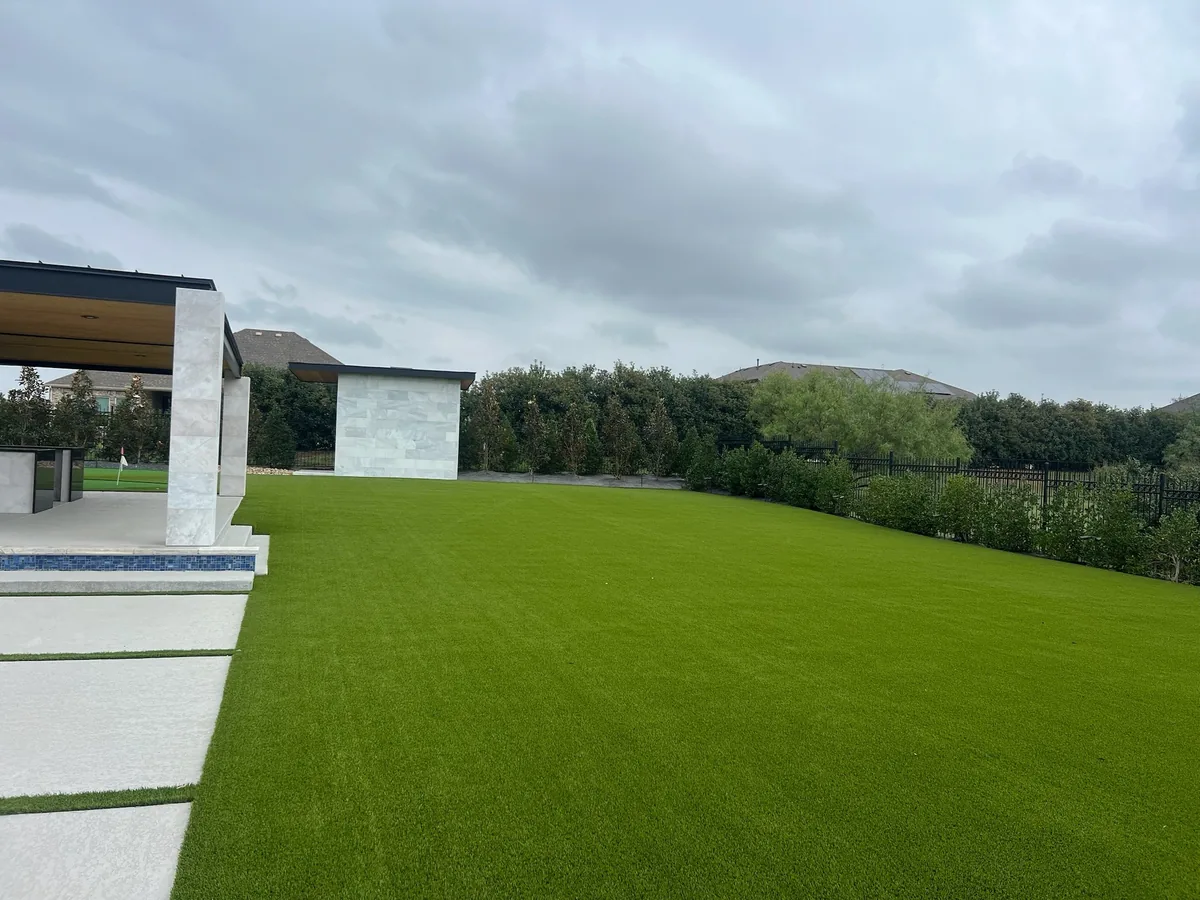
Short answer
Yes, weeds can grow in artificial grass, though most start on top or at an edge, where seed lands in infill mixed with leaf litter. Nutsedge is the main weed that can come up from below. In a Frisco yard, taking out the old grass, keeping edges tight and clearing leaves before they break down all help.
Can weeds grow through artificial grass? They can, though most start on top. Seed lands in the infill, settles in with dust and leaf litter, and sprouts in a spot that stays damp. Drainage is part of the same question, because turf that sheds rain well gives weeds fewer places to start, and a spot that puddles can grow them. Both come down to a few habits. Our low-maintenance yard North Texas homepage lists the kinds of turf we put in.
Where do weeds on artificial grass come from?
Most weeds reach turf from the top and the sides, with nutsedge the main one that can still come up from below. Edges tend to come first, where turf meets a bed or a fence and soil is right there. After that comes seed blown in on the wind. University of Georgia Extension's note on how seeds travel describes dandelions and thistles carried on the wind by feathery seeds, and other plants sprouting wherever birds leave their droppings. Organic litter adds to it, since leaves, pecan hulls and clippings from the lawn next door can break down into a thin layer of soil on top of the infill. Penn State's Center for Sports Surface Research says in a synthetic turf maintenance guide for athletic fields that if organic debris isn't removed in time, or the field doesn't drain rapidly, weeds can grow on synthetic turf.
Taking the old grass out roots and all is generally the best prevention for weeds coming up from the native soil. Nutsedge can be stubborn, because its tubers can sit deep in the ground and its shoots can push through fabric and mulch. If you already have it, ask your installer how they would handle it before work starts.
Why do so many turf weeds start at the edges?
Edges deserve the most attention. A bed line set a few inches off the turf, a clean bender board or steel edge, and turf pinned tight against it all make it harder for weeds to get started there. Gaps along fences need closing, and play set posts need a clean cut around them. Those edges and post cutouts deserve extra care on a play area, and our Frisco playground turf page explains how one is built.
Along fence lines, Bermuda and nutsedge from the yard next door can creep under the edge through runners and underground growth. A deeper edge restraint can help, and it is worth keeping that fence strip clear of soil buildup. What goes under the turf, the compacted stone and any fabric between stone and clay, is covered in our post on installing turf on North Texas clay.
Does rain drain through artificial grass, and how fast?
Yes, on most landscape turf, since the backing is perforated or flow-through and the sand or coated infill passes water as well. Products differ, and the clay underneath tends to be the slow part, so a lot depends on whether the base has somewhere to send the water.
We don't quote an inches per hour figure, because it depends on the backing, the infill and the base. You can ask any installer where the water goes once it reaches the stone. The City of Frisco's year round watering rules bar runoff leaving your property and bar watering streets and driveways. They are written for outdoor watering and don't cover storm water, but a turf area still needs an outlet that doesn't push water at the house or onto a neighbor.
What should you check when a puddle keeps coming back?
Start with the simple explanations. Infill can pack down over time and get capped with fine debris, and water may sit on that cap. A stiff brush against the grain can loosen it. Sometimes water simply beads up on the surface and won't soak in. Penn State's guide calls this hydrophobicity and says it can typically be fixed by spraying a wetting agent onto the field. It also notes that fields and their gravel drainage have been removed and replaced at high cost when hydrophobicity was the real issue. That guide is about athletic fields, so check with your turf maker before spraying anything on a home lawn.
If a puddle keeps coming back in the same place, the base is the next place to look. It could be a spot that settled, a grade that never fell toward an outlet, an outlet a bed has grown over, or water arriving from a neighbor or a downspout. Those problems get fixed in the ground under the turf, and the clay post explains what a sound base involves. A puddle that lingers can also keep the infill damp, which gives the next weed a place to start.
What routine helps with weeds and puddles?
Blow or rake leaves off before they break down, especially after the pecans drop. Rinse the turf now and then, more in dog areas, and brush against the grain from time to time to stand the fibers up and loosen the infill. Pull the occasional sprout at an edge while it is small. A young weed is usually easier to get out than an old one, and Penn State's guide warns that weeds in synthetic turf are often surprisingly difficult to pull by hand. Watch the bed edges and keep mulch from migrating onto the turf.
For a yard in Frisco or The Colony, that can add up to a few short sessions a season, which compares well with mowing every week or so through June. If you are weighing that upkeep against the price, our guide to typical turf prices in Frisco has the per square foot range. Use a hose with a shutoff nozzle for any rinse, and please confirm with the city how that fits the hand watering rules between November and March.
Frequently Asked Questions
Can weeds grow through artificial grass?
Less often from below, if the old grass was removed and the turf sits on a compacted stone base. Most weeds on turf start on top, where seed blown in or dropped by birds lands in infill mixed with leaf litter, or at an edge where turf meets soil. Nutsedge is the stubborn exception and can come up from below.
Does rain drain through artificial turf?
Yes, on most landscape turf. A perforated or flow-through backing and infill that passes water let rain go through the surface, and what happens next depends on the base. On clay the crushed stone under the turf is generally graded so water moves toward an outlet, since clay absorbs it slowly. Products differ, so ask what yours has.
Why is water pooling on my artificial grass?
It could be the base: a spot that settled, a grade that never fell toward an outlet, or an outlet a bed has grown over. It could also be packed infill, which a brush can loosen, or water beading on the surface, which Penn State says a wetting agent can typically fix on athletic fields.
How do I get rid of weeds on artificial turf without damaging it?
Pull them while small, when they tend to come out more easily, then clear the leaf litter around them and brush the spot. Weeds in turf can be hard to pull. For a stubborn patch, check your turf maker's guidance before using any herbicide, and keep hot tools and strong solvents off the fibers.
Ready to Get Started in Frisco?
Frisco Artificial Turf Pros serves Frisco and the surrounding area. Tell us about the yard and we'll write up a quote.